




Indonesia's New Commodity Exchange: A Real Challenge to Malaysia's Palm Oil Pricing Power?
Indonesia's New Commodity Exchange: A Real Challenge to Malaysia's Palm Oil Pricing Power?
Published by KK Industrial Insights | August 24, 2026
Based on reporting by South China Morning Post (SCMP)
The most consequential story in the global vegetable oil market this week is not a specific price move — it is a question of who gets to set the price.
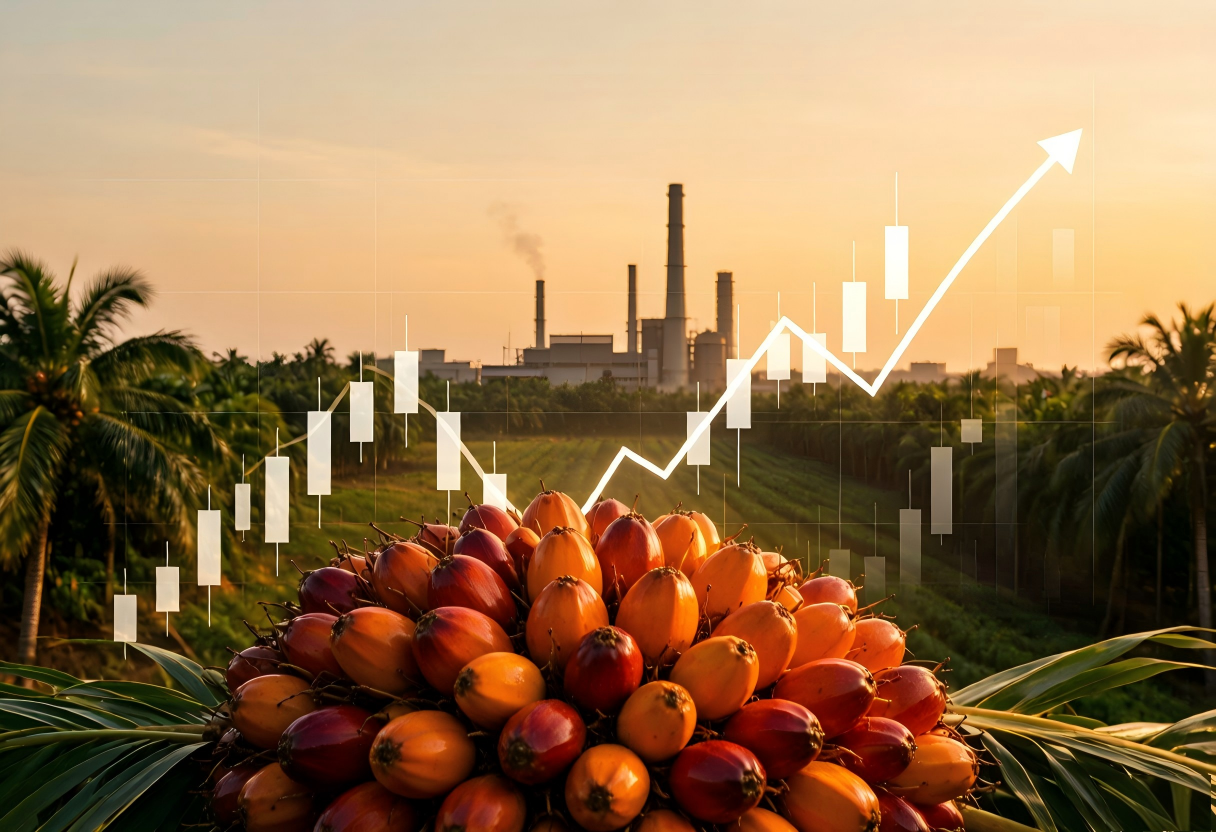
Indonesia, the world's largest palm oil producer and exporter, has announced plans to build its own strategic commodity exchange. The stated ambition: to move from being a global "price taker" to a "price maker."
For buyers, refiners, and traders of palm oil, palm kernel oil, and oleochemical derivatives, this deserves attention. Here is what is happening, what analysts are saying, and what it means for importers.
The Paradox: Biggest Producer, But Not the Price Setter
Indonesia accounts for roughly 60% of global palm oil exports — by far the largest supply source in the market.
Yet the industry's benchmark price is still set elsewhere: the FCPO (Crude Palm Oil futures) contract on Bursa Malaysia remains the reference standard that international traders use for pricing and hedging.
In other words: Indonesia sells the most, but the price is decided by its neighbor. The Prabowo administration has made clear it no longer wants to accept this arrangement.
Prabowo's Play: The BMKS Exchange
In his annual budget speech before the People's Consultative Assembly, President Prabowo Subianto made the ambition explicit:
"We don't just want to be producers of global commodities. We must become the price makers of global commodities."
The Financial Services Authority (OJK) has since named Henry Rialdi as Deputy Commissioner to supervise the new exchange's regulation and oversight.
The new venue is called BMKS (Strategic Mineral and Commodity Exchange), scheduled to begin operations on January 1, 2027. It will initially cover three commodities:
| Commodity | Regulatory Focus |
|---|---|
| Palm oil | Export prices, export volumes, taxation |
| Nickel | Export prices, export volumes, taxation |
| Coal | Export prices, export volumes, taxation |
Palm oil is clearly the entry point — but the broader design covers Indonesia's entire commodity export complex, giving the government unified oversight of pricing, volumes, and tax collection across key export sectors.
What Analysts Say: Supply Leadership ≠ Pricing Power
Market analysts have received the announcement with measured caution. The core argument: physical supply dominance does not automatically translate into pricing power.
Three structural barriers stand in the way:
- Trading inertia. FCPO has been the reference contract for international pricing and hedging for decades. Switching benchmarks is costly and risky for market participants.
- Liquidity barrier. A new exchange needs years to build trading volume, participant depth, and market confidence.
- International trust. Pricing power ultimately rests on the global credibility of a country's financial infrastructure — something that takes a long time to build.
The gap between "selling the most" and "setting the price" is a full stack of financial infrastructure. Whether BMKS can genuinely challenge FCPO will likely take years to determine.
What This Means for Buyers and Importers
For Chinese and global buyers of palm oil, palm kernel oil, fatty acids, glycerine, and other oleochemicals, the impact is medium-to-long term and gradual:
Short Term (6–12 Months): High Attention, Limited Impact
- Import pricing for palm oil and derivatives continues to reference Malaysian FCPO plus Indonesian spot offers.
- BMKS is not yet operational; no direct impact on existing procurement pricing or contract terms.
- For live market prices, continue to refer to third-party real-time platforms such as Oilchem, SCI99, Mysteel, and 100ppi (data must be verified against latest third-party releases).
Medium Term (1–3 Years): Policy Variables Worth Watching
- Greater export data transparency: unified regulatory reporting of export volumes and prices.
- Tax policy coordination: Indonesia's export levies (including the existing DSI Levy structure) may be adjusted in sync with the new exchange.
- B50 biodiesel policy: continued growth in domestic consumption of palm-based biodiesel will directly reduce the volume available for export.
Our advice to procurement teams: keep multi-source quotes, maintain flexible contract structures, and manage basis risk with discipline.
KKI's View
For oleochemical exporters and importers, the signal value of this move outweighs its near-term practical impact:
- Indonesia has publicly committed to upgrading from "commodity supplier" to "price setter."
- But the transfer of pricing power is a long-term project — it will not be completed within 2026–2027.
- The most robust risk-management strategy for buyers remains unchanged: diversified sourcing, flexible contracts, and disciplined basis management.
KK Industrial will continue to monitor BMKS development — including the first listed contracts and OJK's regulatory details — and keep our global partners updated as the situation evolves.
About KK Industrial
KK Industrial (Jiaqi Industrial) is headquartered in Hong Kong, China, and has been deeply engaged in the oleochemical sector. Our core business covers 8 major categories with 60+ products — including vegetable oils, fatty acids, fatty alcohols, glycerine, methyl esters, waxes, and feed additives — providing stable supply to customers across the food, daily chemical, industrial, and agricultural industries.
Disclaimer: This article is compiled from public reporting by the South China Morning Post (SCMP) for industry information purposes only. It does not constitute investment or procurement advice. The views expressed do not represent the official position of KK Industrial. Please refer to real-time third-party price platforms for live market data.